Build the core model
Read the lesson and connect each concept to the visual model above.
This drill helps Communication Protocol learners verify deployment outcomes with evidence instead of assuming that a green pipeline automatically means users received the correct content.
What students can learn
- Why
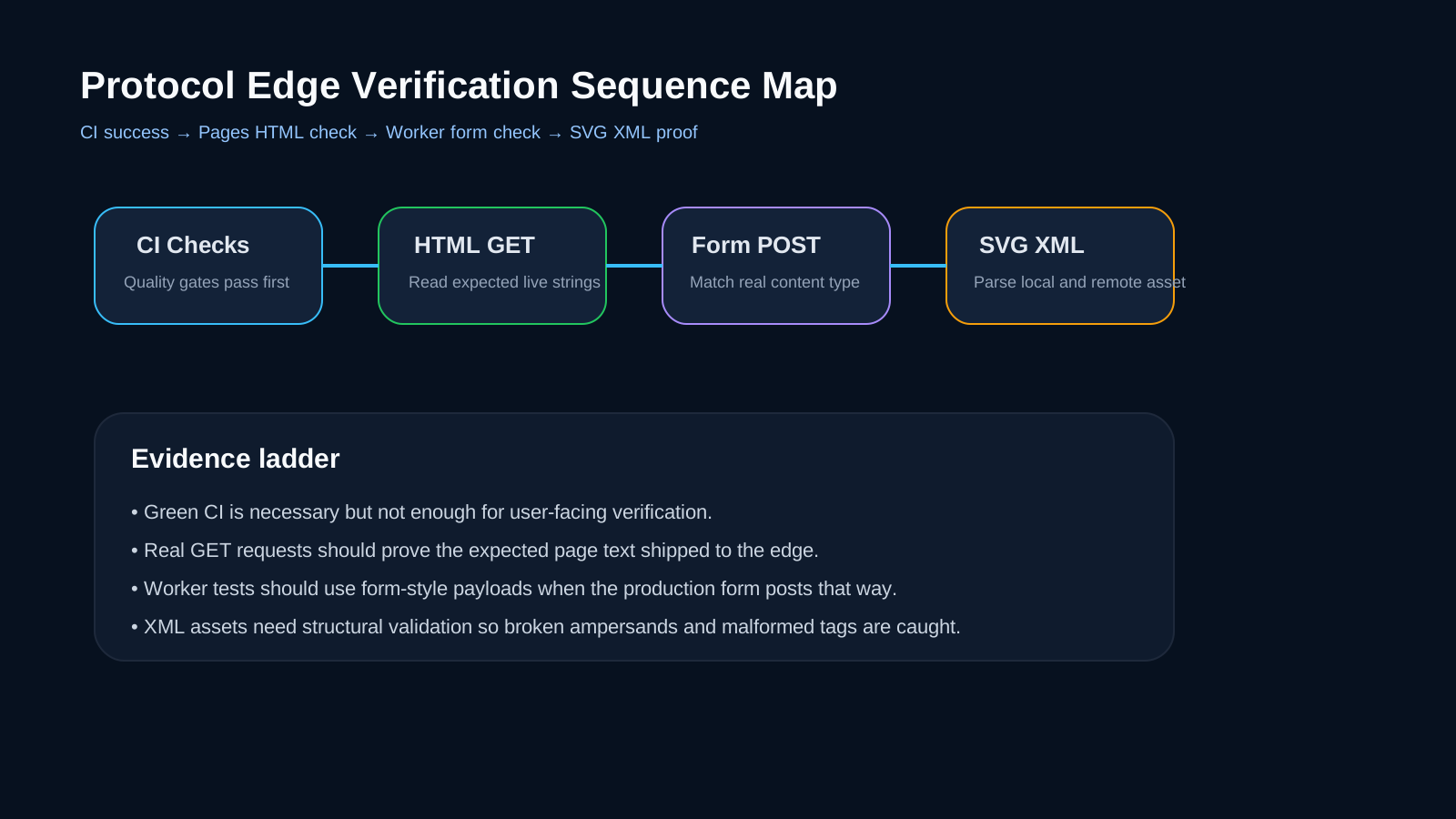
GETrequests and response-body inspection often prove more than a simpleHEADcheck. - How browser-like headers change what edge platforms return for static pages.
- Why XML-based assets such as SVG diagrams should be validated as structured documents after deployment.
Included practice asset
Use the paired edge verification sequence map to walk through each verification layer from workflow completion to final user-visible proof.
Recommended classroom use
- Start with a successful CI run and ask students which extra evidence is still needed before calling the release complete.
- Run the verification commands from the downloadable drill sheet and compare weak versus strong proofs.
- Finish with a short retro on which protocol signal failed first in each scenario.
Why this is useful here
The site already uses GitHub Actions, Cloudflare Pages, and a Worker endpoint. This drill turns that real delivery path into a protocol-reading exercise that strengthens the currently lightest pillar with a practical, low-risk teaching asset.
Work with observable evidence
Use the lab to turn the lesson into a repeatable classroom exercise.
Scenario lab
A digital service is slow or unreliable, but the team has not isolated where the exchange fails.
Trace Protocol Edge Verification Drill from client request to service response and mark the verification boundary.- Focus
- ci/cd, http, edge-verification
- Evidence target
- An annotated exchange trace with observable signal, interpretation, and follow-up test.
Activity checklist
Write what you observed, what it means, and what should be verified next. This draft stays on this device.
Explain the decision
Confirm what you can observe, what remains uncertain, and what should happen next.
Before completing this lesson
- Name the input, decision point, and outcome shown in the visual.
- Identify one artifact that would count as evidence.
- State one limitation and one next verification step.