Build the core model
Read the lesson and connect each concept to the visual model above.
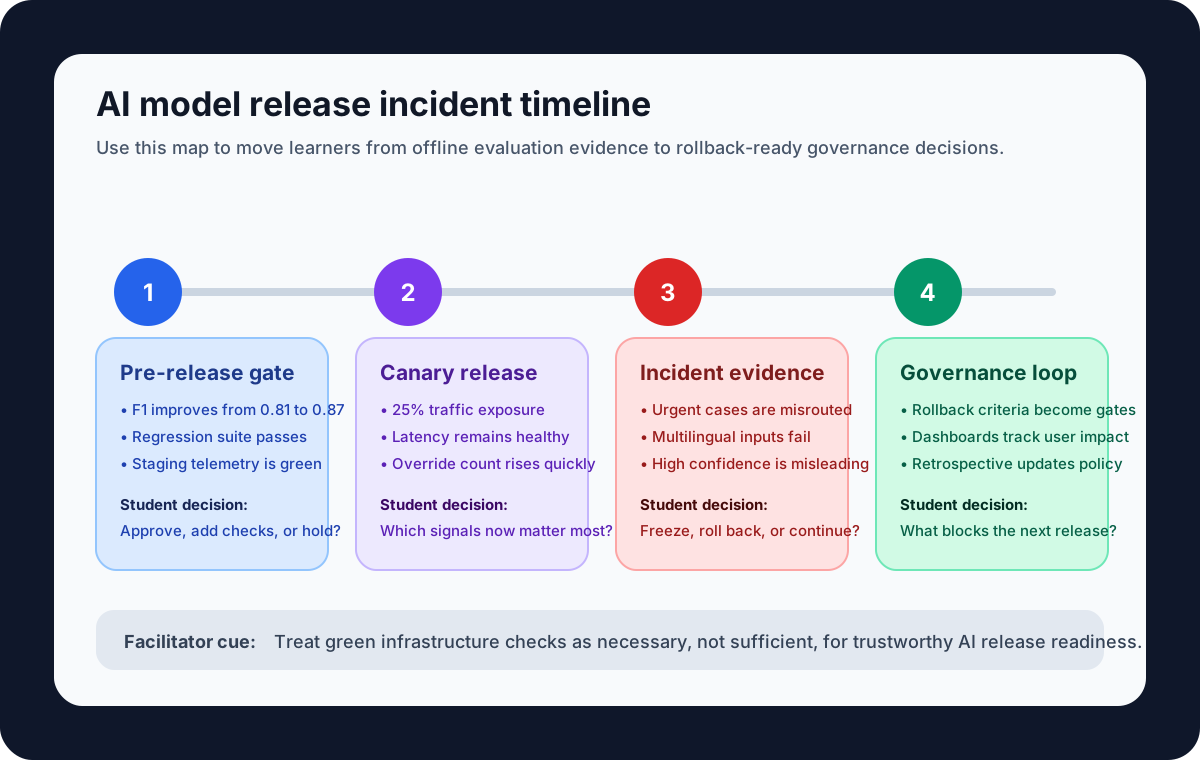
This scenario pack gives Artificial Intelligence learners a realistic way to rehearse release governance instead of discussing trustworthy deployment only at the theory level. Students step through a model release that looks healthy in CI but begins to fail once real production behaviour appears.
What students can learn
- How offline evaluation scores can disagree with live traffic outcomes.
- Why rollback criteria should be defined before an AI release goes to production.
- How incident evidence from logs, user complaints, and threshold breaches changes decision-making.
Recommended classroom use
- Split learners into release manager, evaluator, observability lead, and stakeholder roles.
- Run the scenario in timed rounds so each new evidence packet forces a fresh release decision.
- Use the downloadable AI model release incident timeline as a board prompt while teams decide whether to approve, freeze, roll back, or revise the release gate.
- End with a retrospective on which gates should move earlier into the pipeline.
Why this is useful here
The website already teaches CI/CD, protocol observability, and release guardrails. This scenario pack strengthens the weakest pillar with a hands-on AI artifact that connects those ideas to post-deployment accountability.
Work with observable evidence
Use the lab to turn the lesson into a repeatable classroom exercise.
Scenario lab
An AI-supported feature appears useful, but the team must prove output quality before release.
Turn AI Model Release Incident Scenario Pack into a small evaluation with a human release decision.- Focus
- ci/cd, mlops, incident-response
- Evidence target
- An evaluation record containing test input, expected result, observed result, and release decision.
Activity checklist
Write what you observed, what it means, and what should be verified next. This draft stays on this device.
Explain the decision
Confirm what you can observe, what remains uncertain, and what should happen next.
Before completing this lesson
- Name the input, decision point, and outcome shown in the visual.
- Identify one artifact that would count as evidence.
- State one limitation and one next verification step.